AI Dispatch Agent for HVAC Field Service | Mainstream Digicom
Quick Answer: An AI dispatch agent for HVAC field service automatically answers incoming calls, qualifies the urgency and scope of the issue, collects customer and equipment details, and routes only verified, prequalified leads to your dispatchers or on-call technicians. The result is faster response times, fewer wasted truck rolls, and a dispatcher who starts every conversation already knowing what they're walking into.
What Is an AI Dispatch Agent for HVAC Field Service, and Why Does It Matter Now?
The phone doesn't care that it's 11 p.m. on a Friday in February when the temperature in Laval is sitting at –22°C. It rings, and whoever is on the other end is panicking about a failed furnace, a flooded basement from a burst pipe on the same system, or a commercial walk-in cooler that's been warm since Tuesday.
The problem isn't that HVAC companies lack skilled dispatchers. The problem is that dispatchers are humans, and humans sleep, get overwhelmed during volume spikes, and sometimes collect call details inconsistently under pressure.
An AI dispatch agent for HVAC field service is a conversational AI — typically voice-first, sometimes SMS or web chat — that sits in front of your phone line before a human ever answers. It greets the caller, walks them through a structured intake script, identifies whether the situation is an emergency, gathers system details (make, model, age, last service date), confirms the service address, and either books the appointment into your scheduling software or escalates to an on-call tech with a full written brief already in hand.
We've deployed these systems for trades and field service companies in the greater Montreal region. The difference isn't marginal. One HVAC operator in the South Shore cut their average after-hours call-to-dispatch time from 18 minutes to under 4 minutes — not because the AI is faster at talking, but because a technician was no longer doing intake triage while half-asleep.
How Does the AI Qualification Workflow Actually Work on a Live Call?
This is the question most owners ask right after "will it sound robotic?" (Answer to that one: no, not if it's built properly.)
Here's a simplified call flow we use for HVAC dispatch clients:
Step 1 — Greeting and Intent Detection
The AI answers within one ring, introduces itself as the company's virtual scheduling assistant, and asks an open-ended question: "Are you calling about an emergency service need, or can I help you schedule a routine appointment?"
Natural language processing (NLP) classifies the caller's intent. It's not a phone tree. The caller speaks naturally.
Step 2 — Emergency Triage Protocol
If the caller signals urgency — "my heat is out," "there's water coming from the furnace," "the restaurant is at 60 degrees" — the AI immediately escalates its questioning:
- Is anyone in the home vulnerable? (Elderly, infants, medical equipment)
- Is there any smell of gas or visible water damage?
- What's the make and model of the unit, if visible?
- When did the problem start?
Gas smell or safety threat? The AI instructs the caller to exit and call 911 or Énergir's emergency line, and simultaneously flags the call as a safety incident in your CRM. This alone removes significant liability from your intake process.
Step 3 — Routine Intake and Scheduling
For non-emergency calls, the AI collects service address, preferred time windows, system type (forced air, radiant, mini-split, commercial rooftop), warranty status, and any relevant history. It can read back available appointment slots directly from your scheduling software via API integration.
Step 4 — Handoff Package
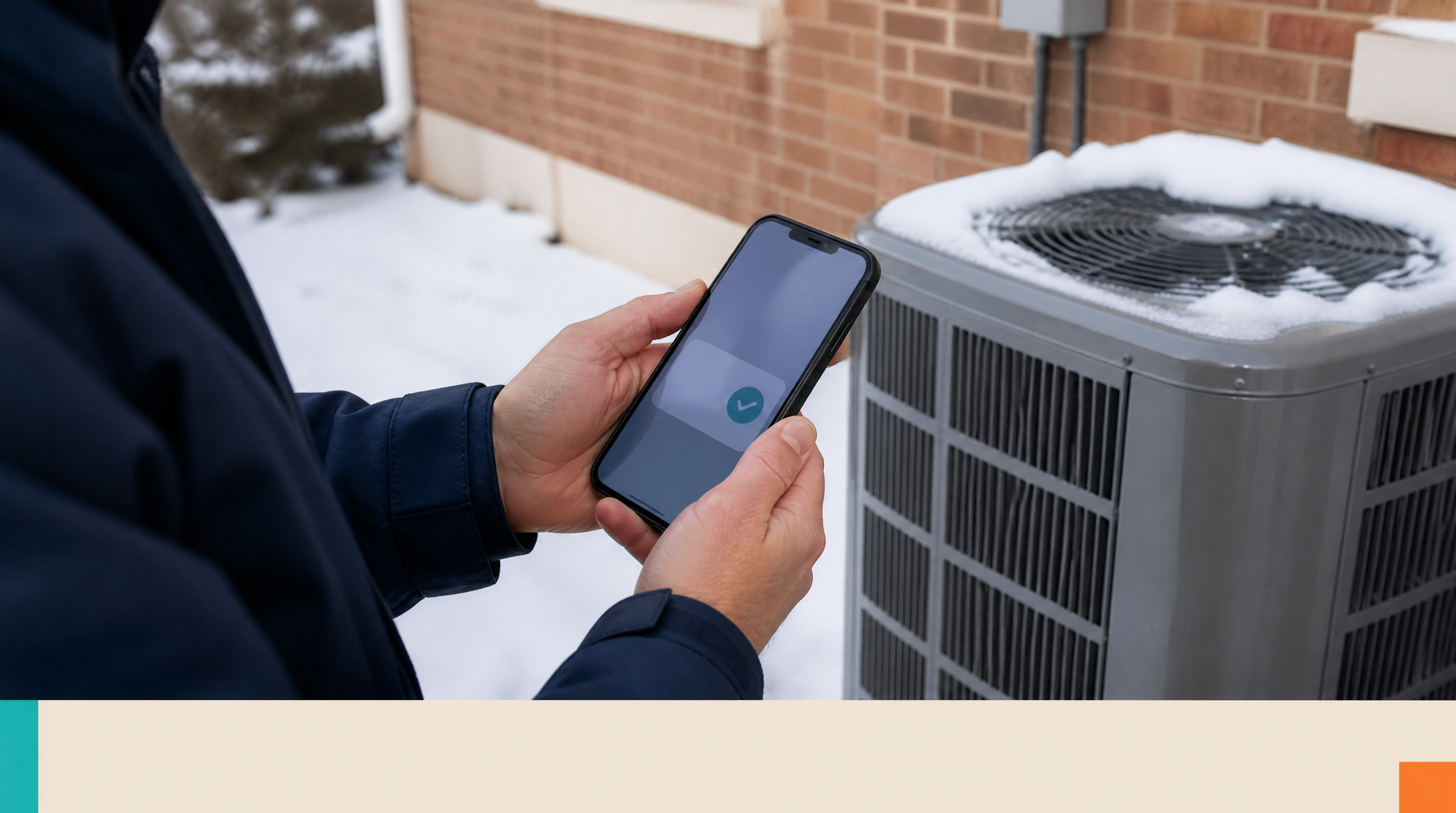
Whether the call ends in a booked appointment or an escalation to your on-call tech, a structured summary is pushed to your dispatcher dashboard, your CRM, and optionally as an SMS to the assigned technician. The tech arrives knowing the system type, the symptom, and the customer's preferred contact method — before they've said a word to anyone.
What Are the Real Operational Benefits for HVAC Companies?
Let's talk numbers, because "efficiency" without specifics is just marketing copy.
Volume handling: A single AI agent can handle unlimited simultaneous calls. During a polar vortex event — which Quebec sees regularly — call volume can spike 400–600% in under two hours. Human dispatchers bottleneck. The AI does not.
Consistent data quality: Every call produces the same fields, filled in the same order. Technicians stop showing up without knowing the equipment brand. Office managers stop chasing down zip codes. Incomplete job tickets drop dramatically — we typically see a 70–80% reduction in missing intake fields after deployment.
After-hours coverage without after-hours overhead: You're not paying a call center $18–25/hour overnight to read from a script. The AI costs a fraction of that and follows the script perfectly every single time.
Lead qualification before human time is spent: Not every call is a real emergency. Some are "my programmable thermostat is doing something weird and I need someone now" — a situation that, once properly triaged, turns into a next-day appointment. The AI makes that determination. Your on-call tech only gets woken up when it actually matters.
The Dispatcher Experience Changes Too
Dispatchers who've worked with AI-assisted intake consistently report lower stress during peak periods. When the AI handles intake, the dispatcher's job shifts from data collection to decision-making — which is where their expertise actually lives. Staff retention in trades dispatch is notoriously difficult; reducing the grind of repetitive intake calls is a meaningful quality-of-life improvement.
Is an AI Dispatch Agent Right for HVAC Companies Specifically, or Is This a Generic Tool?
This is a fair challenge. Generic call automation — the kind where you're pressing 1 for English and 4 to repeat the menu — has been around since the 1990s and everyone hates it. What we're talking about is categorically different.
HVAC-specific AI dispatch agents are tuned for:
- Industry vocabulary (ECM motors, TXV valves, heat exchanger cracks, refrigerant types)
- Seasonal urgency patterns (heating season vs. cooling season vs. shoulder months)
- Quebec-specific regulatory context (R-410A phase-out timelines, Hydro-Québec rebate eligibility questions)
- Bilingual capability — French and English on the same line, detected automatically from the caller's first sentence
A contractor who serves both Westmount and Repentigny can't afford an AI that stumbles over French-language requests or doesn't understand that a "thermopompe" and a "heat pump" are the same piece of equipment in a service context. Bilingual, domain-trained AI is not optional in this market — it's table stakes.
We build these agents with HVAC-specific entity recognition trained on actual service call transcripts, not generic customer service templates. The difference is audible within the first 30 seconds of a test call.
How Hard Is Integration with Existing HVAC Software?
The integration question is where most owners expect bad news. It's actually more manageable than it looks, and the path is clearer than it was even two years ago.
Most mid-size HVAC operators in Canada are running one of a short list of field service management platforms: ServiceTitan, Jobber, HouseCall Pro, or FieldEdge. All four have open APIs. Our AI dispatch agents connect bidirectionally — reading available slots, writing completed job records, and triggering status notifications.
For companies still running on spreadsheets and a shared Google Calendar (more common than the software vendors would like you to believe), we build a lightweight scheduling layer that acts as the integration point. It's not ideal long-term, but it means you're not locked out of AI-assisted dispatch simply because you haven't moved to enterprise software yet.
Typical integration timeline for an established HVAC operator: 3–5 weeks from kickoff to live calls, including:
- Script development and client review
- CRM/scheduling API connection and testing
- Voice model fine-tuning (accent, cadence, vocabulary)
- Bilingual validation pass
- Soft launch with monitored calls before full deployment
We don't flip a switch and disappear. The first 30 days include call transcript reviews, edge-case identification, and iterative script refinement. HVAC businesses have weird calls — customers who don't know what a furnace is, commercial managers calling on behalf of multi-unit buildings, warranty disputes mid-intake. The agent needs to handle those gracefully, and that takes real tuning.
What Does This Cost, and What's the ROI Calculation?
Pricing for an AI dispatch agent for HVAC field service varies depending on call volume, integration complexity, and bilingual requirements. At the agency level, you're typically looking at a setup fee plus a monthly service and hosting cost.
A rough ROI framework for a mid-size HVAC operator (8–15 techs):
| Cost Driver | Before AI Agent | After AI Agent |
|---|---|---|
| After-hours call center or on-call admin | $2,500–$4,000/mo | $0–$500/mo |
| Missed calls during peak hours | 15–30% call abandonment | Under 5% |
| Wasted truck rolls (wrong info) | 6–10/month | 1–3/month |
| Average intake time per call | 8–12 minutes | 0 minutes (human) |
A single wasted truck roll in Montreal — labour, fuel, lost billable opportunity — costs $200–$400 conservatively. Eliminating even five per month is $1,000–$2,000 recovered. Stack that against after-hours coverage savings and the math becomes straightforward.
Most clients see full ROI within the first 60–90 days of live operation.
Frequently Asked Questions
Will callers know they're talking to an AI, and does it hurt the customer experience?
Yes, our agents identify themselves as virtual assistants — we build them to be transparent, not deceptive. In practice, customer satisfaction doesn't drop. What callers care about is being heard quickly, having their problem taken seriously, and not being put on hold. A well-built AI agent delivers all three consistently, which is often better than an overwhelmed human dispatcher at 2 a.m.
Can the AI handle both French and English callers on the same phone line?
Yes. Language detection happens within the first few seconds of the call based on the caller's natural speech. The agent switches seamlessly and maintains the same qualification logic in both languages. For Montreal and Quebec-region HVAC operators, bilingual capability is built into our standard deployment, not sold as an add-on.
What happens when the AI encounters a call it can't handle?
Edge cases — complex warranty disputes, hostile callers, situations requiring judgment outside the trained scope — trigger a warm escalation. The AI informs the caller it's transferring them to a team member, and pushes the call transcript collected so far to the receiving dispatcher or tech. No information is lost in the transfer, and the human picks up already partially briefed.
How does the AI dispatch agent handle gas leak or safety emergency calls?
The script includes a dedicated safety detection branch. If a caller mentions gas smell, carbon monoxide, fire, or flooding, the AI immediately provides emergency instructions (evacuate, call 911, call the gas utility), logs the call as a priority safety incident, and sends an immediate alert to your on-call manager. The AI does not attempt to troubleshoot safety emergencies — it routes to appropriate emergency services and escalates internally.
How long does it take to go live, and what's required from the HVAC operator?
Most deployments take 3–5 weeks from signed agreement to live calls. What we need from you: access to your scheduling software or calendar, your existing call scripts or intake forms if you have them, a list of the services and service areas you cover, and one or two team members available for two or three review sessions. We handle the build, integration, voice tuning, and testing.
Does the AI only work for inbound calls, or can it handle outbound as well?
The same AI agent infrastructure supports outbound use cases: appointment reminders, follow-up calls after service completion, rebooking prompts for annual maintenance customers, and review request calls. Many HVAC clients start with inbound dispatch and add outbound automation within the first six months once they see how the system performs.